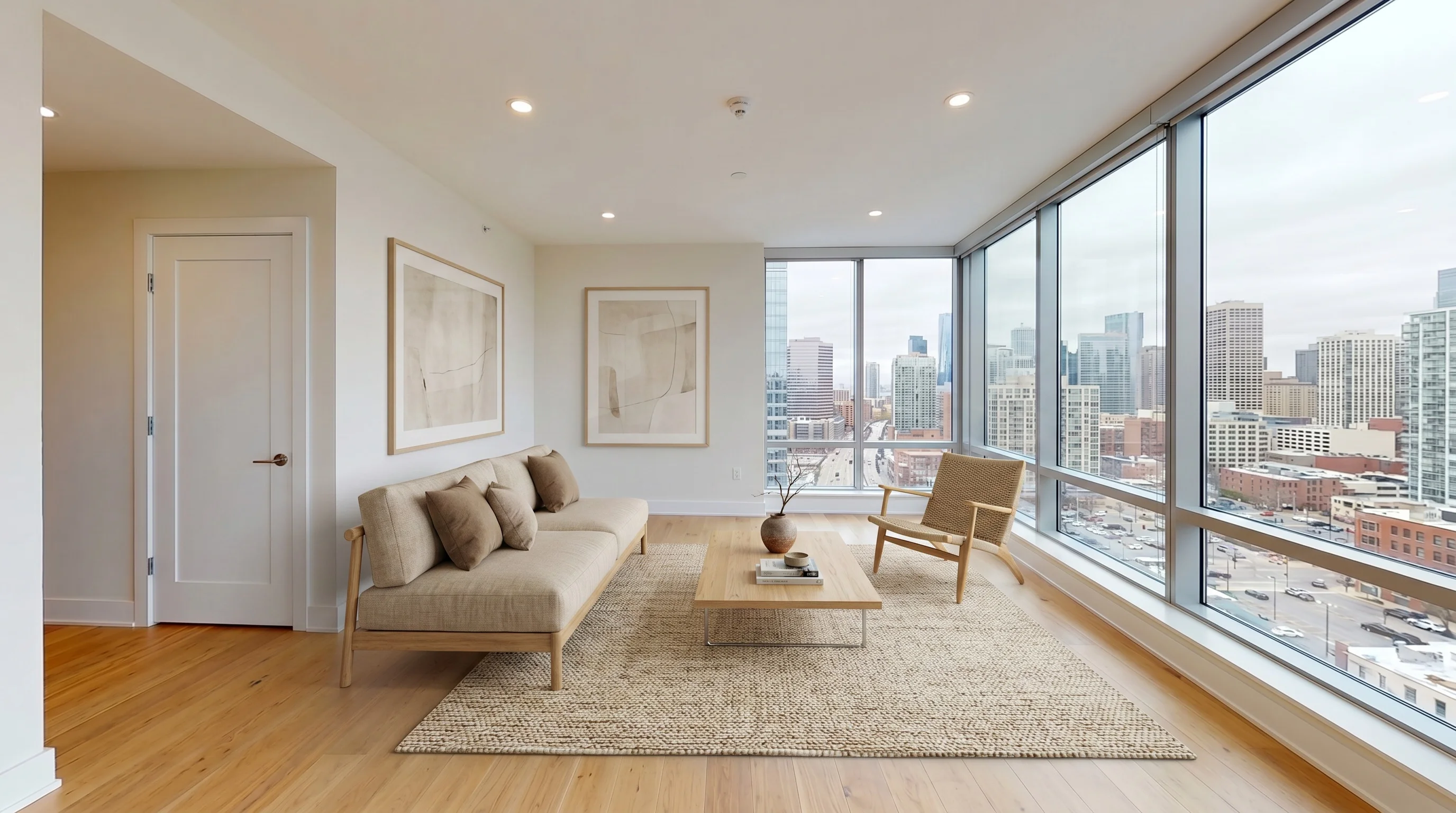
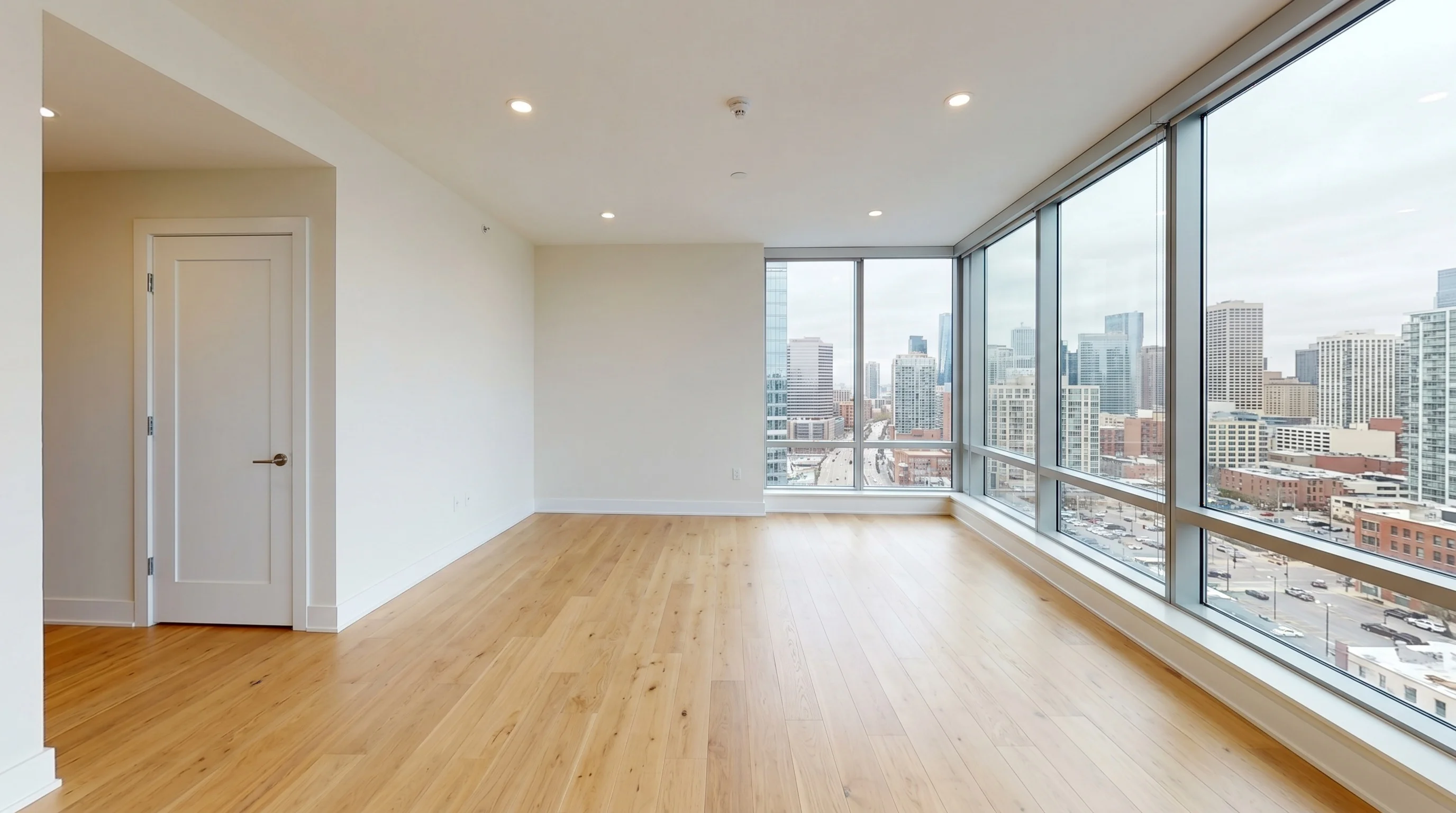
A virtual staging service is somebody else doing the staging work for you — you send empty-room photos, they send back staged ones. That's it. The phrase covers everything from a $30-per-photo human designer to a $1-per-photo AI tool with a friendly interface. The interesting question isn't what is it — it's whether paying somebody else still makes sense in 2026, when you can stage a room yourself in under a minute.
Written by the VirtualStaging.tools editorial team. Last updated June 5, 2026.
This guide walks through what virtual staging services actually deliver, the three shapes they come in today, what a typical order costs, the failure modes that show up on Reddit week after week, the MLS compliance rules, and the handful of situations where hiring is still the right call — plus the much larger set where you're better off self-serving.
What a "virtual staging service" actually delivers
Strip away the marketing and a service is a four-step transaction:
- You upload empty-room listing photos.
- The service stages them — either a human designer in Photoshop / 3D software, or an AI model in seconds.
- You get back finished JPEGs or PNGs you can drop into the MLS.
- You pay per photo, per listing, or by subscription.
What changes from one provider to another is who's behind step 2, how long it takes, what's included (revisions, multiple styles, item-removal, day-to-dusk), and whether you get a commercial license for marketing.
The cleanest way to compare them is by who's actually doing the work — because that's also what drives the price gap from $1 to $75 a photo. We covered the full price math in our virtual staging cost guide; this post is about the service side of the transaction.
The three flavors of service today
The industry has split into three models, each with a different cost structure and different best-fit user.
Full-service human staging ($25–$75 per photo)
A designer opens your photo in Photoshop or a 3D tool, builds a furnished room, matches the lighting, and sends it back in 24–48 hours. Companies like BoxBrownie, Stuccco, Styldod, and PadStyler operate this way. Revisions are usually free within a window; rush fees apply if you need it same-day. We put this human-designer route head-to-head with the AI approach in our Box Brownie vs VirtualStaging.tools comparison.
You're paying for judgment — a human notices that the room is south-facing and picks warm furniture, or spots that the kitchen island is unusually small and scales accordingly. The output is consistently usable.
Pure-AI staging ($0–$5 per photo)
You upload, pick a style, get a result in seconds. Tools like VirtualStaging.tools, Virtual Staging AI (Zillow-owned since October 2024), REimagineHome, and others sit here. Most offer a free tier (we offer 3 photos free, lifetime — no credit card). Subscriptions hover around $15–$30 a month for 25–100 photos depending on the provider.
You're paying for speed and unit economics. The designer's judgment is replaced by the model's training, which handles 80–90% of standard rooms flawlessly and occasionally produces an oddball you re-roll for free.
Hybrid services ($10–$20 per photo)
A growing middle tier runs an AI model under the hood and adds light human QA — someone reviews the output, fixes obvious issues, and sends it back. Turnaround is faster than full-service (often a few hours) and quality is more consistent than pure AI.
The risk in this tier is paying done-for-you money for DIY quality. A few providers genuinely add value with their review pass; others just queue an AI render and slap a markup on it. The price alone doesn't tell you which is which — ask whether revisions are included and what their re-render policy looks like.
The 2026 service landscape at a glance
Before picking a tier, it helps to see what each looks like with names attached. The three segments below are how Google's AI Overview categorizes the market in mid-2026, and how working agents talk about it on Reddit:
| Tier | Representative vendors | Typical price | Reddit consensus |
|---|---|---|---|
| Pure AI self-serve | VirtualStaging.tools, Virtual Staging AI (Zillow), REimagineHome, Collov, ApplyDesign | $0–$5/photo or $15–$30/mo | Fast and cheap; quality varies room to room; check scale and multi-angle consistency before paying |
| Designer-edited service | BoxBrownie, Stuccco, Styldod, VirtualStaging.com, RoOomy | $24–$32/photo standard, up to $75 bespoke | Reliable human-finished output; 12–48 h turnaround; better at unusual layouts and luxury listings |
| Freelance marketplace | Fiverr individual designers, VA + ChatGPT custom prompt workflows | $5–$30/photo (highly variable) | Cheap entry; quality unpredictable; no SLA — used as a budget fallback, not a primary workflow |
No single tier is "best." Each fits a different cost / quality / volume profile, and most working agents end up using two — an AI subscription as the daily driver and a designer-edited service on standby for the occasional luxury or unusual listing.
What real agents are saying on Reddit
A snapshot of the conversation in r/realtors and r/RealEstatePhotography over the last 12 months:
On the designer route: "BoxBrownie.com has been my go to for years now. They do excellent work." — RE4Lyfe, r/realtors
On the AI shift: "A few years ago 'virtual staging' meant paying a service... Now AI tools do it in under 30 seconds and quality is genuinely competitive." — FlatLiterature9702, r/RealEstatePhotography
On the skeptic side: "No more AI virtual staging please. It's always a huge letdown when you walk in with buyers with expectations from the virtual staging and the place looks meh." — aromirage, r/realtors
The split is real: agents who have a clean AI workflow love the speed; those who have lost a showing to a mismatched render are wary. Which camp you end up in is decided by the failure modes covered further down — get those right and the AI route works; ignore them and a service is a better bet.
What ordering a service looks like, step by step
A first-time order usually goes:
- Create an account. Free for AI tools; full-service providers may require a billing setup before you upload.
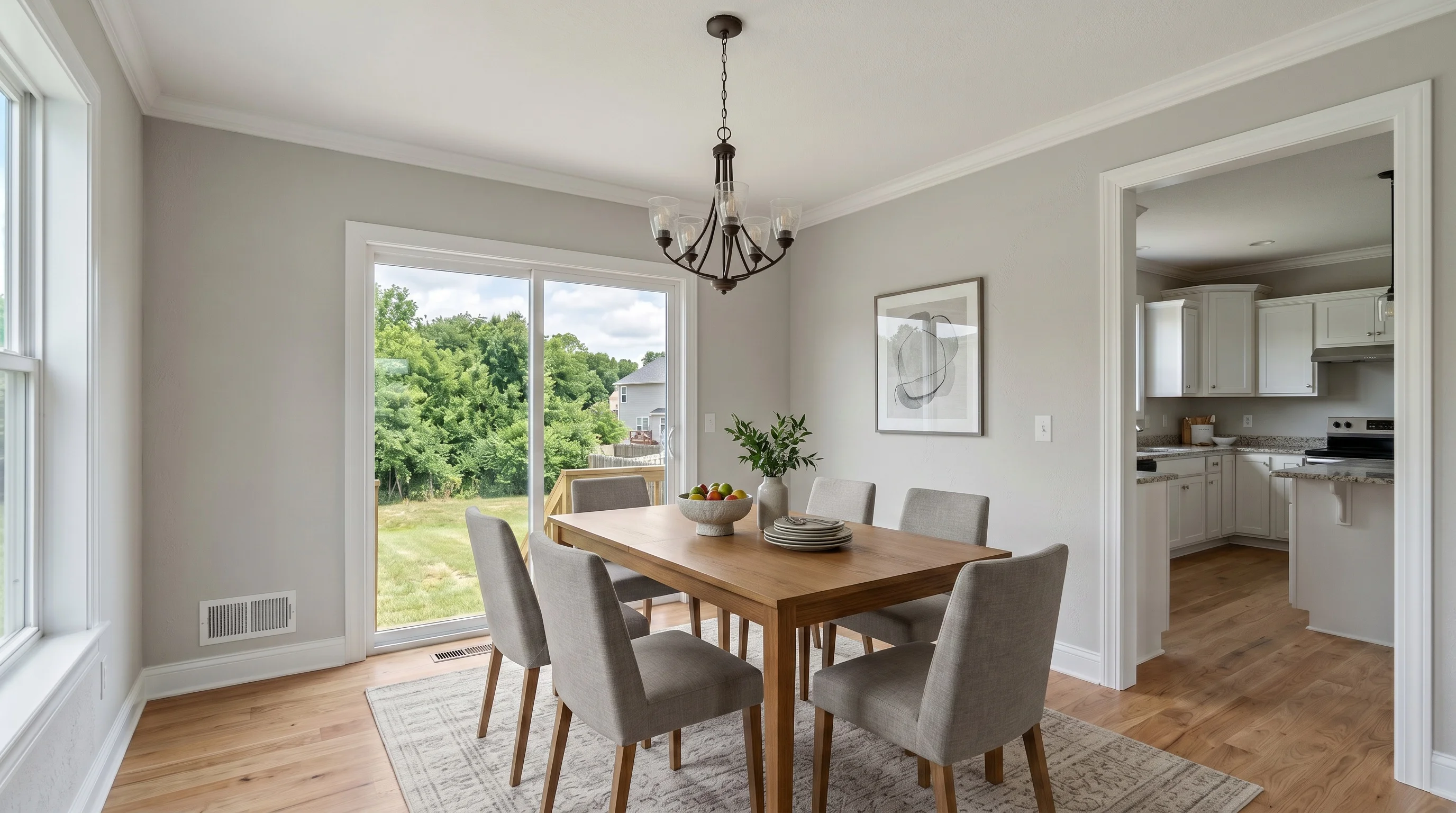
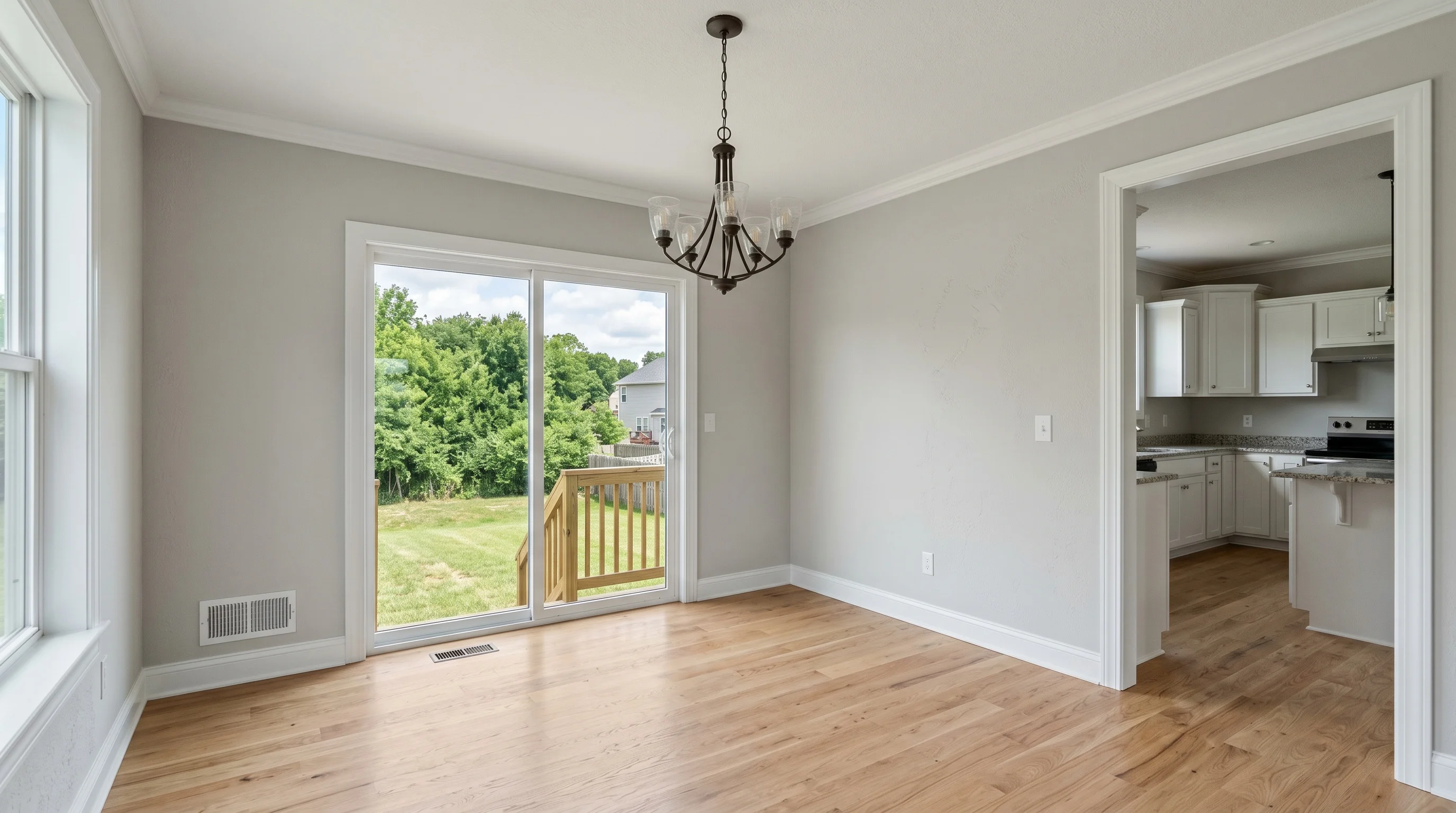
- Upload the empty-room photo. Most accept JPEG/PNG, recommend 1024px+ on the long edge, and ask you to shoot in landscape with the camera at chest height. Bad input creates bad output — see our virtual staging photos guide for the shoot-side details.
- Pick a style. Contemporary, Scandinavian, modern farmhouse, coastal, luxury — most services offer 6–12 presets. Some let you write a free-form prompt.
- Specify the room type. Living, bedroom, dining, home office. The service uses this to choose appropriate furniture (a sofa goes in living rooms, not dining rooms).
- Wait. Seconds for AI, hours-to-overnight for human or hybrid services.
- Download and use. Output is usually high-res JPEG ready for MLS upload. Commercial license terms vary — read them before posting.
What it costs in 2026
The per-photo number depends entirely on which flavor you pick.
| Service type | Per-photo cost | Free tier | Subscription option |
|---|---|---|---|
| Full-service human (BoxBrownie, Stuccco) | $24–$32 standard, up to $75 bespoke | Rare | Volume discounts above ~50 photos/mo |
| Hybrid (AI + light human QA) | $10–$20 | Sometimes | Most have monthly plans |
| Pure AI (VirtualStaging.tools, Virtual Staging AI) | $0–$5 | Yes — most give 1–5 free photos | $15–$30/mo for 25–100 photos |
The biggest gotcha isn't the headline rate, it's what's not in it:
- Revisions — full-service includes 1–2; beyond that, surcharge. AI tools just let you re-render at no extra cost.
- Rush fees — same-day at full-service typically adds 25–100% on top of base price.
- Multiple styles per room — counts as a new photo on most full-service providers; free re-rolls on most AI tools.
- Commercial license — usually included, but a few providers gate it behind a higher plan. Check before you upload.
- Annual auto-renewal — a recurring complaint pattern across Trustpilot reviews of AI-tier services: yearly plans renew without notice for $192–$468. If you sign up annual, calendar a reminder 10 days before the renewal date.
For agents working at volume, the cumulative matters more than the per-photo number. If you list 30 homes a year with eight photos each, full-service runs you ~$6,000–$18,000 annually; AI subscriptions run $180–$360. Choosing between them is a workflow question, not just a price question. Our breakdown of top virtual staging companies compares the major full-service and AI options side by side.
Where virtual staging services go wrong — what to check before you pay
The single most common Reddit complaint about virtual staging — across both AI and designer-edited services — is that the staged photo doesn't match reality, and a buyer walking into the empty house feels misled. Four patterns repeat. Test for each one before committing to a service, no matter the tier.
1. Furniture-to-room scale is wrong
A 3-seater sofa rendered between two doors that physically couldn't fit one. A bed sized for a child's bedroom dropped into a primary suite. Both AI tools and rushed designers do this when they don't have accurate room dimensions, and it's the single most-cited quality failure in r/realtors and r/AskRealEstateAgents.
"There's no way the furniture pictured would have fit in the space. That happens a lot." — nikidmaclay, r/realtors
"The furniture is 100% not true to size. Do you really think a 3-seater sofa fits between the glass doors and the window?" — InfraScaler, r/AskRealEstateAgents
Check before paying: Look at any sample showing a sofa or bed and ask whether it would actually fit between the visible architectural features (windows, doors, columns). If the answer is "barely" or "no," the service has a scale problem.
2. Multi-angle inconsistency
If your listing has two photos of the same room from different angles, AI services often render different furniture in each — a leather sofa in one shot, a fabric sectional in the other. The same room with two layouts is the fastest way to make a listing look fabricated.
"You can tell it's virtually staged at first glance because it uses the same type of furniture in every room, especially those blue velvet chairs." — LeePowers69, r/RealEstatePhotography
Check before paying: Stage two photos of the same room and look at the furniture side by side. They should be the same pieces in the same positions. AI tools that don't lock state across renders fail this test reliably.
3. Generic "Pottery Barn" output
Even when scale and consistency are right, the output can read as templated — beige sectional, glass coffee table, fiddle-leaf plant in the corner, every time. Buyers scrolling MLS notice the pattern across listings and discount what they see.
"It looks generic like it just rolled out of Pottery Barn. Important regardless of whether or not your MLS requires it, that you state in the photo it has been virtually staged and include the original photo untouched." — Infamous_Hyena_8882, r/AskRealEstateAgents
Check before paying: Pick a service that exposes multiple style presets (modern, Scandinavian, farmhouse, coastal) and produces genuinely different output for each. Test the same room in two styles and confirm the difference isn't just throw-pillow color.
4. Hallucinated windows, doors, and floor finishes
The biggest red line. Some AI tools quietly re-render windows, change flooring, or remove fixtures while adding furniture — that isn't staging, it's misrepresentation. Buyers who notice the discrepancy in person walk away from the listing, and the agent who posted it can face MLS sanctions.
"We rarely change dimensions of rooms or remove windows." — Alexirb, AI-Stager founder explaining their design constraint in r/RealEstatePhotography — implying competitors regularly do.
Check before paying: Run a service on an empty-room photo and compare the original to the output pixel by pixel. Walls, windows, doors, ceilings, floors must be unchanged. The only thing different is the added furniture. If anything else moved, do not use that service for MLS uploads — full stop.
Turnaround, revisions, rush fees — the SLA reality
Three SLA dimensions matter more than agents usually think about upfront:
Turnaround. Standard full-service is 24–48 hours. That sounds fine until you remember a listing often goes live in 48 hours from the photo shoot, and you want it staged before it goes live. AI tools deliver in seconds, which means you can shoot a room, drive to the office, and have it staged before you sit down.
Revisions. Full-service providers vary — BoxBrownie includes one free revision; some bespoke services include unlimited within a 7-day window; others charge per revision. AI tools effectively have unlimited revisions because each re-render costs cents.
Rush fees. A 24-hour SLA bumped to same-day usually costs 25–100% extra. Some providers don't offer rush at all. AI tools don't have this concept — every render is "rush."
The pattern: if your listings are predictable and you shoot well in advance, SLA differences barely matter. If you're often booking under deadline, the AI / hybrid speed gap is what tips the math.
MLS rules and the legal line
Virtual staging is legal in every U.S. state, but must be disclosed in nearly every MLS. The compliance rules apply identically whether a human designer or an AI model did the staging — the disclosure is about the edit, not about who made it.
California (AB 2992, in effect since 2024). Residential listings that include digitally altered photographs must include a clear disclosure that the photograph has been digitally altered. Standard practice is a caption on each staged photo and a single line in the listing remarks.
NAR Code of Ethics, Article 12. REALTORS® "shall be honest and truthful in their real estate communications and shall present a true picture in their advertising, marketing, and other representations." Misrepresenting permanent features (walls, windows, floors) through virtual staging — even by accident — is an Article 12 violation. The standard is "true picture," not "good-looking picture."
Regional MLSs vary. Bright MLS, NWMLS, MRED, and most other major boards explicitly allow virtually staged photos with caption disclosure; a smaller number require the unstaged original to be uploaded alongside the staged version. Always verify your local board's rule before posting — the policy is usually in a one-paragraph appendix to the photo rules. Reddit's r/realtors community confirms enforcement is uneven but real: agents have been asked to relabel or pull staged photos that lacked captions.
Best practice — five rules that keep you safe everywhere:
- Label every staged photo "Virtually Staged" in the caption.
- Add one line in listing remarks: "Some photos have been virtually staged."
- Keep the unstaged original on file and upload it alongside if your MLS allows or requires it.
- Never alter permanent features — walls, windows, floors, fixtures must stay as the buyer will see them.
- If the listing is in California, follow AB 2992's specific disclosure wording.
Most "buyer felt deceived" complaints in real-estate subreddits trace back to listings that broke rule 4. Get that one right and the legal risk shrinks to a paperwork checkbox.
When a service still beats DIY AI
Four honest scenarios where hiring still wins:
-
High-end luxury listings. A $2M home gets photographed by a pro who shoots from creative angles AI struggles to interpret — wide vertical pans, drone deck shots, low-light dusk scenes. A human designer handles those cases better, and at that price point an extra $300 in staging cost is invisible in the marketing budget.
-
Unusual layouts. Open-plan spaces with no clear room boundaries, octagonal rooms, lofts with mezzanines — AI models occasionally place furniture badly because the spatial logic is ambiguous. A human spots and fixes it on the first pass.
-
Item-removal + restaging combined. If you need a tenant's furniture removed before staging, full-service can do both in one workflow. AI tools can do it but you'll stack two operations and may not get the cleanest seam between them.
-
You're billing it through. If you're staging on a brokerage account or a client is reimbursing you, full-service comes with an invoice and a paper trail. Some accounting workflows just expect a vendor bill.
When self-serving with AI wins
The other side of the same coin — five cases where it's almost always faster, cheaper, and just as good to do it yourself:
-
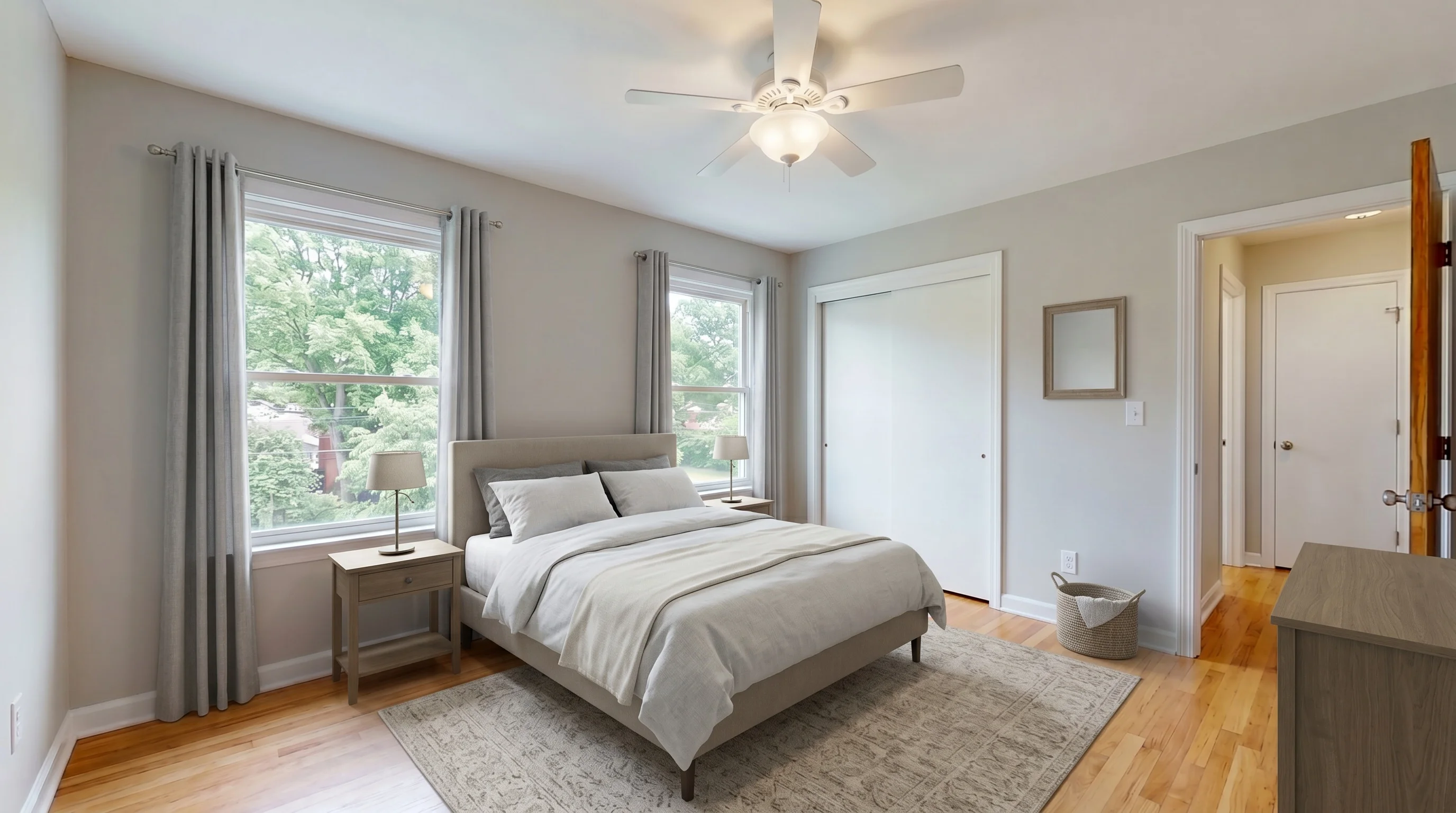
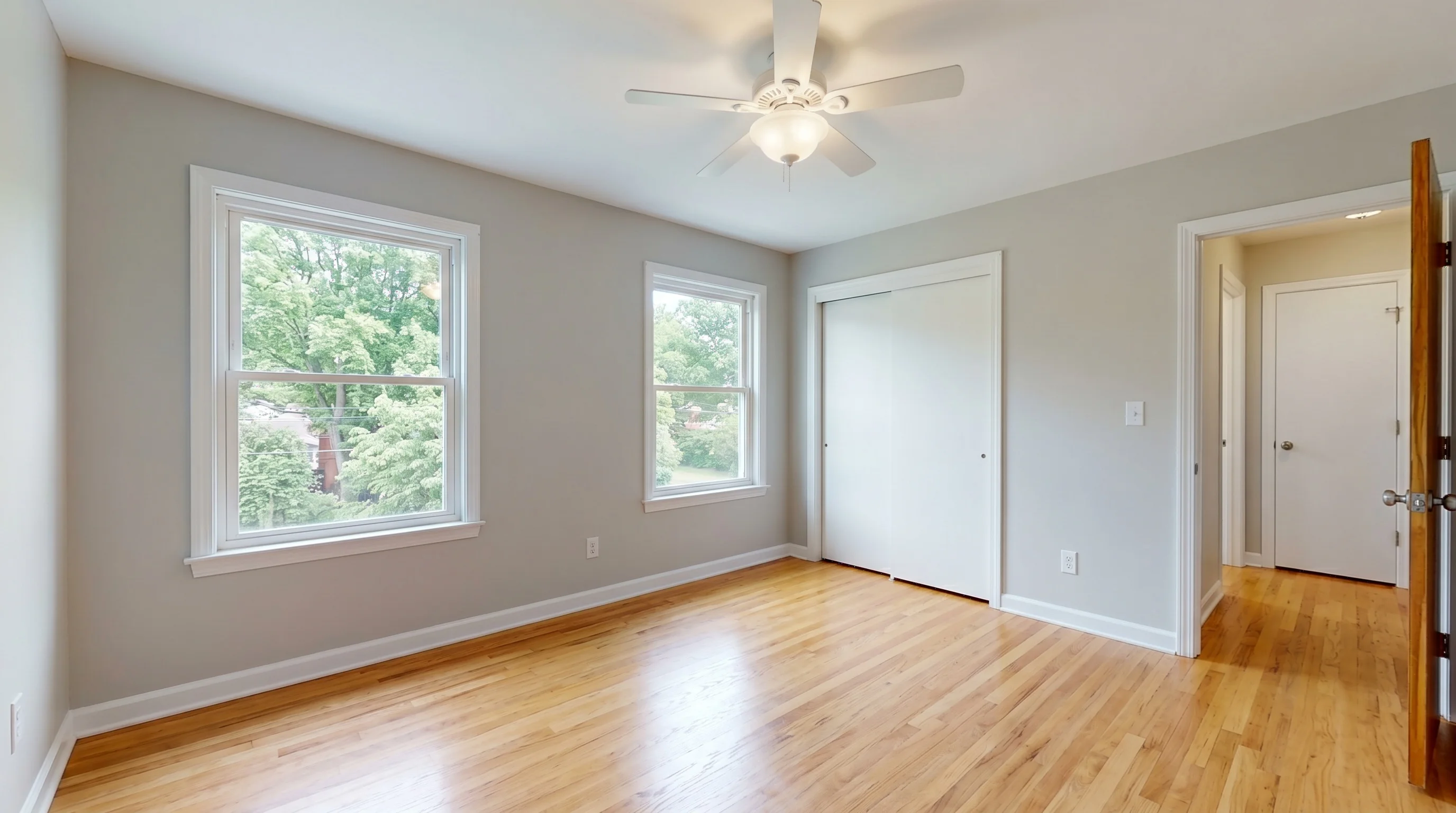
Standard rooms. Living, bedroom, dining, home office — the rooms that show up in 90% of listings. AI handles these effortlessly and the result is indistinguishable from human-designer work to a buyer scrolling on Zillow.
-
High listing volume. Twenty listings a year at eight photos each is 160 photos. At $30 each that's $4,800 with a full-service vendor. At $0.20 each on a subscription it's $32. Even if you re-roll half of them, the math doesn't compare.
-
Same-day or overnight deadlines. Listing goes live tomorrow morning, photos came in tonight — AI stages every room in the time it takes to make coffee.
-
Trying multiple styles. "Show this living room in contemporary, Scandinavian, and modern farmhouse so I can pick the best one for the demo." Three full-service photos = $90 and two days. Three AI renders = nothing and ninety seconds.
-
Solo agents who want control. You see the result instantly, you can re-render with one click if a chair landed weird, you don't wait on anyone's schedule. The friction of going through a service is itself a cost.
How to choose: a 60-second decision tree
Three questions sort 90% of cases:
- How many listings per year? Under five, full-service is fine. Five to twenty, hybrid or AI subscription. Over twenty, AI is the only sane unit-economic choice.
- What's the listing price band? Under $500K, AI. $500K–$1.5M, AI for most rooms + human for hero shots if needed. Above $1.5M, full-service is reasonable cover for the marketing budget.
- How fast do you need it? Same day → AI. Overnight → AI or hybrid. Two days → any. Five days → any.
Most working agents end up with an AI subscription as the daily driver and a full-service provider on standby for the rare luxury or weird-layout listing. That's the practical equilibrium today.
Frequently Asked Questions
What is a virtual staging service?
A virtual staging service is a company or platform that adds furniture and décor to empty-room listing photos digitally — either by having a human designer do it in Photoshop / 3D software, or by running an AI model on your image. You upload an empty room, pick a style, and get back a photorealistic staged version you can post on the MLS. Costs range from $0 on a free AI tier to about $75 per photo for bespoke human designer work.
How do you virtually stage a house for free?
Three practical paths in 2026. (1) AI tools' free tiers — VirtualStaging.tools gives 3 photos lifetime with no credit card; Virtual Staging AI and Collov let you run one render before paying. (2) DIY in ChatGPT or Google Gemini with a careful prompt — quality is inconsistent and rarely MLS-clean, but workable for a single test image. (3) Skip staging entirely and post the empty room with floor plans and clear dimensions — Reddit's r/realtors community is split roughly evenly on whether buyers prefer this for visualizing their own setup. None of the three carry an annual auto-renewal trap.
How much does a virtual staging service cost in 2026?
Per-photo prices range from about $1 on AI tools to $75 on bespoke human-designer services. The middle is $10–$20 for hybrid services that combine AI with light human QA. Full-service providers like BoxBrownie and Stuccco sit at $24–$35 per photo. AI subscriptions are usually $15–$30 a month for 25–100 photos. Most AI tools include a small free tier so you can test before paying — VirtualStaging.tools gives 3 photos free, no card.
How long does a virtual staging service take?
Pure AI tools return a finished photo in seconds — typically under a minute including upload time. Hybrid services with a human QA step take a few hours. Full-service human-designer providers usually quote 24–48 hours standard, with same-day rush available for 25–100% more. If you're working under deadline, AI is the only option that consistently delivers under an hour.
Does virtual staging help a house sell faster?
Per the National Association of REALTORS®' 2023 Profile of Home Staging, 81% of buyer's agents say staging makes it easier for buyers to visualize a property as a future home, and 23% reported a 1–5% increase in the offer received for staged homes. RESA reports staged homes spend roughly 33–50% less time on market. Most of those studies measured physical staging — virtual staging is recent enough that direct comparison studies are still thin. The honest read: well-executed virtual staging produces images near-indistinguishable from physically staged ones for most rooms and likely captures most of the same buyer-attention effect, while costing a fraction.
Are virtual staging services worth it compared to AI tools?
For most working agents on standard residential listings, AI tools deliver results indistinguishable from full-service work to a buyer scrolling Zillow — at 5–95% lower cost and in seconds instead of days. Full-service still wins for high-end luxury listings, unusual layouts, complex item-removal jobs, and cases where you need a vendor invoice. The honest answer for the median agent is: keep an AI subscription as the daily driver, hire a full-service provider for the occasional edge case.
Does Zillow do virtual staging?
Yes — through Zillow Showcase, after Zillow Group acquired Virtual Staging AI in October 2024. The integration launched inside Zillow Showcase in September 2025, so agents on the paid Showcase tier can run AI staging directly inside the Zillow workflow. Outside Showcase you need a separate tool. We cover the trade-offs of the Zillow-owned option — including a Trustpilot 3.5★ rating dominated by annual auto-renewal complaints — in our Virtual Staging AI review and alternative.
Should I include the unstaged original photo with the staged one?
Yes — best practice everywhere, and required by some MLSs. The cleanest workflow is to upload the empty-room photo first and the staged version second, with both clearly captioned. This protects you against any "buyer felt misled" complaint and aligns with NAR Article 12 on truthful representation. Aylagirl63, a North Carolina realtor on r/realtors, put it plainly: "Almost always, the unstaged photo follows the digitally staged one… everyone is aware of the staging and no surprises when they walk into empty rooms."
Can I use virtually staged photos on the MLS?
Yes, in every major MLS — but you must disclose that the photos have been virtually staged. Standard practice is to label each staged photo "Virtually Staged" in the caption and add a brief disclosure in the listing remarks. California's AB 2992 (in effect since 2024) makes virtual staging disclosure explicit for residential listings; NAR's Code of Ethics Article 12 requires honest representation across the board. The rule is the same whether a human or AI did the staging — disclose, keep the unmodified original on file, and never alter walls, windows, or floors.
Do virtual staging services offer revisions?
Most full-service providers include 1–2 revisions in the base price; bespoke services often include unlimited revisions within a 7-day window; some hybrid services charge per revision after the first. AI tools effectively have unlimited revisions because re-rendering costs cents (or nothing on a free tier). If revisions matter for your workflow, read the fine print before you sign up — "1 revision included" can mean a 25% surcharge for a second pass.
Can a virtual staging service remove existing furniture?
Yes, most full-service providers and a growing number of AI tools offer item-removal (sometimes called "decluttering" or "furniture removal") as a separate workflow step or combined service. The cleanest result usually requires running removal and staging together in one pipeline — splitting them across two vendors can produce a visible seam. Pricing for item-removal is typically similar to or slightly higher than staging itself.
What's the difference between virtual staging and virtual renovation services?
Virtual staging adds furniture and décor to an empty room without changing the room itself — walls, floors, and fixtures stay as-is. Virtual renovation changes the room — new flooring, repainted walls, replaced cabinets, updated fixtures. Most full-service providers offer both as separate products at different price points. Disclosure rules are stricter for renovation because you're showing buyers a room that doesn't currently exist; staging is usually a one-line caption, renovation often needs an explicit "concept" or "rendering" label.
How do I pick the best virtual staging service for my business?
Start with three questions: how many listings per year, what price band, and how fast you usually need staging delivered. Under five listings or above the $1.5M price band, a full-service provider's quality and accountability make sense. Five to twenty listings on mid-range homes, a hybrid service or AI subscription is the sweet spot. Over twenty listings or routine same-day deadlines, AI is the only model whose unit economics work. Test the free tier on a real listing photo — including the four failure-mode checks above — before committing. Quality varies more than marketing suggests.
Do I need a commercial license to use virtually staged photos in marketing?
Most reputable services include a commercial license for real estate marketing in the base price — meaning you can post on the MLS, Zillow, social media, and brochures without further cost. A few gate commercial use behind a higher tier (most often free trials of AI tools), so confirm before you upload. The license usually covers the listing agent or brokerage that ordered the work; selling the staged image as stock photography is virtually always prohibited.
Sources & Methodology
This guide was researched against primary sources between June 4 and June 5, 2026. Next refresh: September 2026.
Industry data
- National Association of REALTORS®, 2023 Profile of Home Staging — nar.realtor research reports
- NAR Code of Ethics, Article 12 — nar.realtor code of ethics
- Real Estate Staging Association (RESA), Consumer Insights Survey series — realestatestagingassociation.com
State law cited
- California AB 2992 (in effect 2024) — Residential listing photo digital-alteration disclosure — California Legislative Information
Vendor pricing verified at
- virtualstagingai.app/pricing (Zillow-owned since Oct 2024)
- boxbrownie.com/virtual-staging
- stuccco.com
- virtualstaging.com
Practitioner quotes — captured verbatim from public Reddit threads:
- r/realtors threads 1pf6ftc, 1ia1n4f
- r/RealEstatePhotography threads 1r6q84g, 1k4iv62, 1g0i33g
- r/AskRealEstateAgents thread 1q19b88
Specific usernames are linked inline above. If you spot a stale claim or a citation that no longer resolves, contact us so we can update.
More from the blog
Related reading
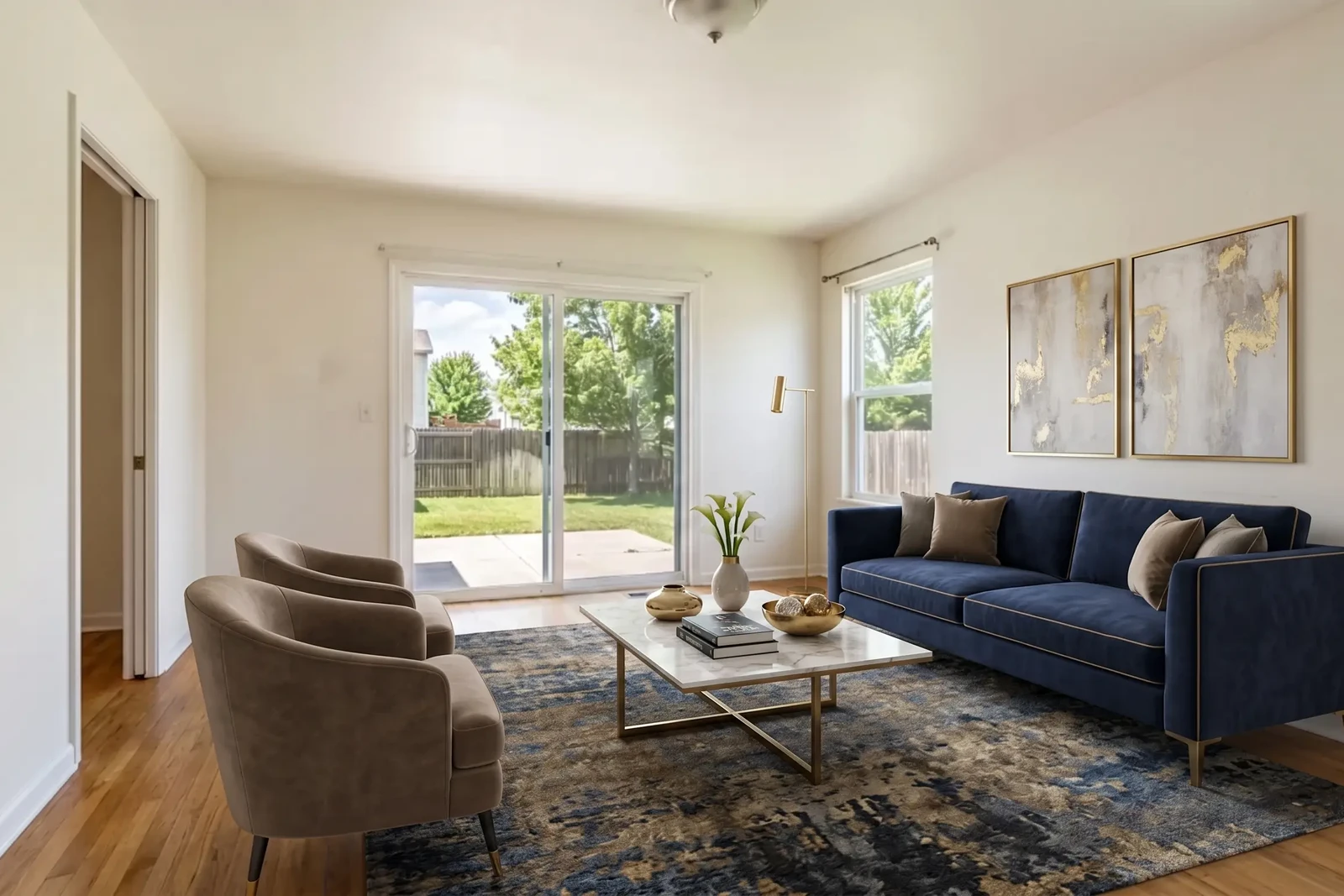
Virtual Staging in Real Estate: The Agent's ROI Guide for 2026
How real estate agents use virtual staging to sell listings faster, reduce costs, and win more clients — with disclosure requirements, workflow tips, and ROI data.

Virtual Staging Photos: How to Get Listing-Ready Shots
What virtual staging photos are, how to get great ones, and the MLS disclosure rules — a practical 2026 guide for agents staging their own listings.

How to Write Instructions AI Staging Will Follow
We tested five staging instructions on real listing photos. The four that worked share one trait — and the one that failed shows the model's limit.